Interleukin-15 record compiled by Panacea Bio Chem — Bogdan DicoiasPanacea Bio Chem · Immunology Record Cytokine & Immunotherapy Knowledge Base · Updated Jul 2026
Panacea Bio Chem › Immunology records › Cytokines › Interleukin-15
Cytokine Record Symbol: IL15 NCBI Gene 3600 Homo sapiens

Interleukin-15 (IL-15)

The cytokine that grows natural killer and CD8 T cells — and the fragile molecule cancer immunotherapy is trying to keep

Official symbolIL15 · interleukin 15
Also known asIL-15, IL15A
Molecule classFour-helix-bundle cytokine (IL-2 superfamily)
Gene locus4q31.21 (human)
ReceptorIL-15Rα (CD215) · IL-2/15Rβ (CD122) · γc (CD132)
SignallingJAK1 / JAK3 → STAT5
Grows / sustainsNK cells · CD8 T cells · NKT · memory T cells
Record statusCompiled · Panacea Bio Chem Ltd
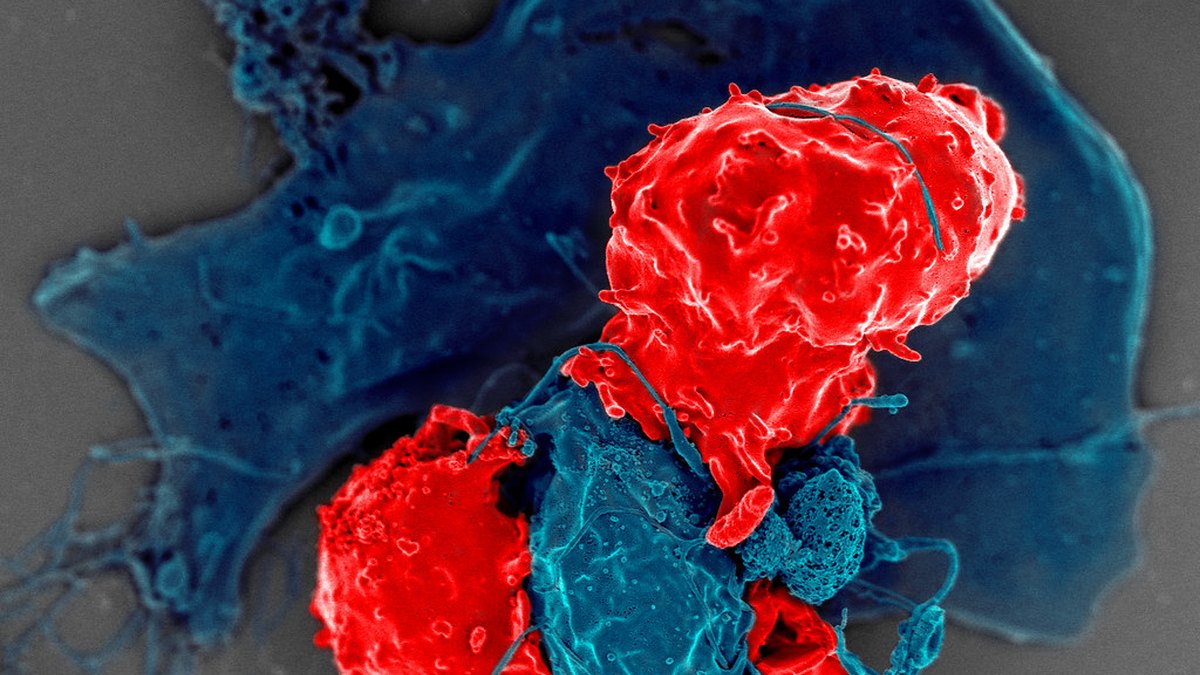
Colour-enhanced electron micrograph of interacting immune cells — the natural killer and CD8 T cells that interleukin-15 (IL-15) grows and sustains — compiled by Panacea Bio Chem, Bogdan Dicoias
Immune cells in contact: interleukin-15 (IL-15) is the signal that builds and maintains the cytotoxic arm — natural killer and CD8 T cells. A cytokine record compiled by Panacea Bio Chem, Bogdan Dicoias.
Record summary

Interleukin-15 (IL-15) is a small cytokine1 — a signalling protein immune cells use to talk to one another. Its distinctive job is to build and maintain the body's cytotoxic arm: natural killer (NK) cells, CD8⁺ T cells, NKT cells and long-lived memory T cells. It is unusual among cytokines because it is delivered by trans-presentation — handed cell-to-cell rather than freely secreted. Those same properties make IL-15 a leading target in cancer immunotherapy, and engineered IL-15 superagonists such as N-803 have carried it into the clinic. Yet IL-15 is a fragile folded protein, and keeping a cytokine intact through drying, storage and reconstitution is a separate, open problem — the preservation frontier where Panacea Bio Chem works.

1What interleukin-15 actually is

A cytokine is a short protein that immune cells release, or display, to change the behaviour of other cells — the messaging layer of the immune system. Interleukin-15 is one of the most potent of these messages for the body's killing machinery. Its particular assignment is the cytotoxic lineage: it drives the development, survival and expansion of natural killer (NK) cells and CD8⁺ (cytotoxic) T cells, and it maintains the memory T cells2 that remember a past infection. Take IL-15 away and those populations wither; supply it, and they grow, live longer, and stay poised to destroy infected or cancerous cells.

Structurally, IL-15 is a compact four-α-helix-bundle cytokine in the same family as interleukin-2. In humans the IL15 gene sits on chromosome 4q31.211, and the mature protein works at vanishingly small concentrations. It signals into a target cell through a shared receptor core — the IL-2/IL-15 receptor β chain (CD122) and the common γ chain (CD132) — firing the JAK/STAT5 pathway that tells a lymphocyte to survive and divide.

2Trans-presentation — a cytokine that stays on the surface

Most cytokines are secreted: a cell makes them and lets them drift away to find a receptor. IL-15 breaks that rule. Inside a presenting cell — a dendritic cell, macrophage or monocyte — IL-15 is captured by a high-affinity partner chain, IL-15Rα (CD215), and the pair is escorted to the cell surface as a complex. There, one cell physically hands the cytokine to a neighbouring NK or T cell across the point of contact between them. This mechanism is called trans-presentation3: IL-15 and its α-chain must be produced by the same presenting cell, and the signal is delivered at a cell-to-cell junction rather than broadcast into the blood.

That design keeps the signal local, contact-dependent and tightly held — a molecule built to be presented and quickly consumed, not to flood the body. It is an elegant piece of biology, and, as the record returns to below, it is exactly what makes IL-15 so awkward to bottle as a drug.

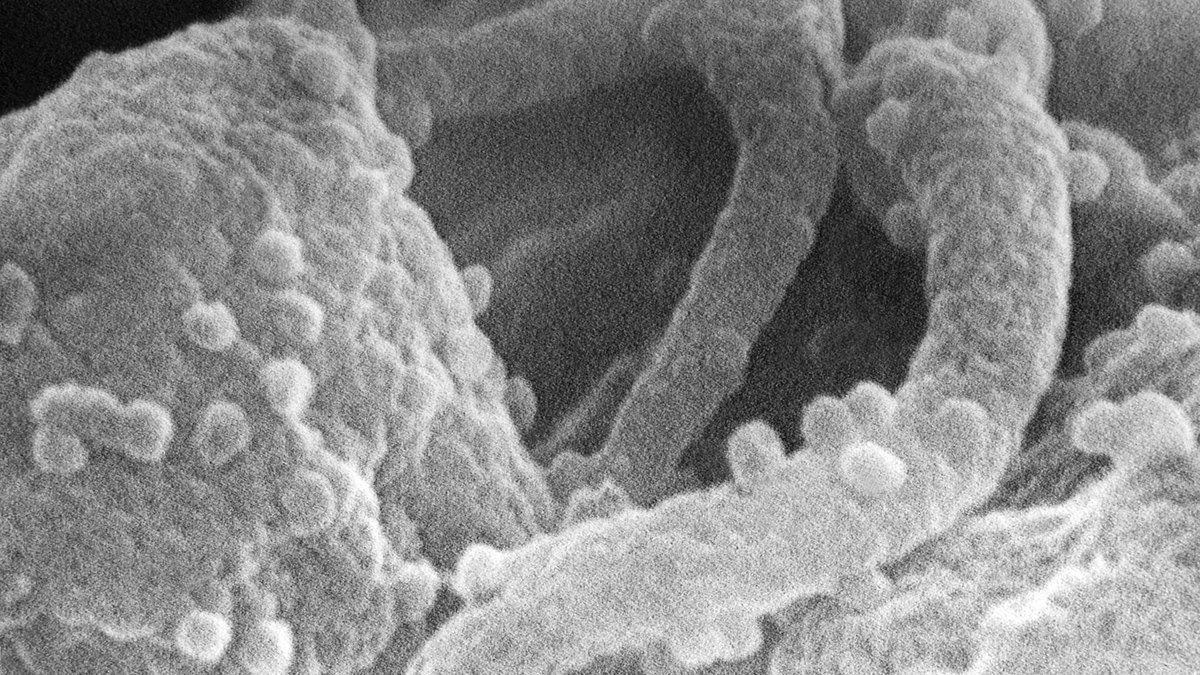
Scanning electron micrograph of a crowded immune-cell surface where interleukin-15 (IL-15) is trans-presented from one cell to another — Panacea Bio Chem, Bogdan Dicoias
The crowded cell surface: IL-15 bound to its α-chain is carried here and handed to a neighbouring lymphocyte by trans-presentation — the mechanism that makes interleukin-15 unusual among cytokines. Panacea Bio Chem, Bogdan Dicoias.

3IL-2 versus IL-15 — same job, different molecule

IL-15's closest relative is interleukin-2, the first T-cell growth factor ever described. The two share the β and γ receptor chains and both push T and NK cells to expand — yet they pull the immune system in subtly different directions. IL-2 also strongly feeds regulatory T cells (Tregs), the suppressive cells that dampen an immune response, and at high doses it can be toxic. IL-15 leans the other way: it favours the cytotoxic and memory compartment and drives far less Treg expansion2.

For cancer immunotherapy that contrast is the whole point. If the goal is to grow the cells that attack a tumour while sparing the cells that suppress the attack, IL-15 is the more attractive lever. That single distinction — same receptor hardware, opposite regulatory tilt — is why a molecule discovered as an "IL-2 impostor" (see §8) became a frontier of its own.

4IL-15 in cancer immunotherapy — the superagonist trick

Because IL-15 grows exactly the cells that hunt tumours while largely sparing the suppressive ones, it became a natural target for immuno-oncology. But native IL-15 is hard to use directly: on its own its serum half-life is measured in tens of minutes, so a plain infusion is gone almost before it works. The field's answer was to engineer longevity into the molecule — the IL-15 superagonist.

A superagonist fuses an IL-15 variant to a piece of its own receptor (the IL-15Rα "sushi" domain) and often to an antibody Fc region, so the complex persists far longer in lymphoid tissue and drives stronger NK and CD8 expansion. The best-known is N-803 — nogapendekin alfa inbakicept, formerly ALT-803 — which pairs an IL-15N72D mutein with an IL-15Rα-sushi/IgG1 Fc scaffold4. N-803 has been studied across bladder, lung and other cancers, frequently alongside checkpoint inhibitors or BCG, and reached the market for BCG-unresponsive non-muscle-invasive bladder cancer in 2024. The engineering trick, in every case, is the same: take a molecule the body wants to consume in minutes, and make it last.

IL-15 is also being explored as a way to arm cell therapies — for example, engineering the cytokine into NK-cell or T-cell products so they persist after infusion, a theme that overlaps directly with CAR-T cell therapy, the living drug that must be kept alive →.

5The preservation frontier — keeping a cytokine alive

The immunology of IL-15 is increasingly well mapped. The quieter, unglamorous problem sits downstream: IL-15 and its engineered cousins are still folded proteins, held together by nothing stronger than the shape they fold into. The receptor only recognises that shape; lose it and the molecule is an inert string of amino acids. Cytokines are notoriously delicate5 — prone to low yields, aggregation and a short shelf life — and the journey from manufacturing line to patient is punishing:

  • Drying to a shelf-stable powder can press fragile molecules against hot surfaces and strip away the water that holds a fold together — a classic route to denaturation and aggregation.
  • Storage lets oxygen slowly attack sensitive residues and disulfide bonds over months, quietly eroding activity before a vial is ever opened.
  • Reconstitution can fail when a dried cake forms a sealed outer skin and the core never fully dissolves — the protein is intact but unreachable.

Where Panacea Bio Chem works

Panacea Bio Chem works on the preservation end of this problem: keeping a fragile folded protein intact through drying, storage and reconstitution. The work is ongoing and exploratory — a preservation-engineering programme aimed squarely at the failure modes above, not a cytokine-therapy programme in itself. Its proprietary methods point at each stage of the journey:

These are described in outline only; the exact parameters, sequences and hardware are held by Bogdan Dicoias and remain a Panacea Bio Chem secret. The reason IL-15 matters here is simple: a cytokine therapy is only as good as the fraction of molecules that arrive still folded and still active — and that last mile is an engineering frontier, not a solved question.

6Reference data — the IL-15 signalling machine

Core components of the interleukin-15 system (reference figures; identities and receptor architecture from the cited literature):

ComponentAlso known asRole
IL-15 (ligand)IL15, IL-15ACytokine — grows NK & CD8 T cells
IL-15RαCD215High-affinity capture chain; enables trans-presentation
IL-2/IL-15RβCD122Shared signalling chain (also used by IL-2)
Common γ chainCD132, γcShared signalling chain across the γc cytokines
Downstream pathwayJAK1/JAK3 → STAT5Survival & proliferation signal
Native serum half-life—~ minutes — the reason superagonists exist
N-803 (superagonist)ALT-803IL-15N72D + IL-15RαSu / IgG1 Fc; long-acting

7Where IL-15 could hit hardest

Reasoning about the highest-impact directions — as much a research map as a summary:

  • Solid-tumour immunotherapy — where response to existing agents is weakest, a cytokine that expands cytotoxic and memory cells (without feeding suppressive Tregs) targets the biggest unmet need in oncology.
  • Cytokine-armed cell therapies — building IL-15 into NK- or T-cell products to make them persist after infusion, a frontier shared with CAR-T cell therapy →.
  • Vaccine and infection adjuvants — IL-15's role in building durable memory makes it a candidate for strengthening long-lived immune responses.
  • Long-acting biologics that survive the supply chain — the whole class only reaches patients if the folded protein survives drying, storage and reconstitution intact; this is the preservation-engineering axis Panacea researches.
  • Dual-chamber and self-reconstituting formats — fragile cytokines dosed from a cake that dissolves cleanly, a fit for cartridges such as Lyoprester® →.

These fields double as an R&D map: the biggest wins cluster wherever a fragile cytokine's fleeting life — in the body and on the shelf — currently limits what it can do.

8Discovery — the molecule that impersonated IL-2

The story behind the record

In 1994 two separate laboratories, working independently, ran into the same ghost. Each was studying cell cultures that grew T cells the way interleukin-2 does — yet when they blocked IL-2 entirely, the growth carried on. Something else was doing IL-2's job. One team, at Immunex, purified it from a monkey kidney cell line; another, at the U.S. National Institutes of Health, chased the same activity and briefly called it "IL-T." When the sequence came back, the surprise was that the new protein shared almost no amino-acid similarity with IL-2 — a completely different molecule that had converged on the very same receptor and the very same job. It was named interleukin-156.

That origin — an impostor that turned out to be its own molecule — set the theme for everything since. IL-15 does what IL-2 does, but on its own terms: trans-presented instead of secreted, tilted toward killers instead of suppressors. Three decades later, engineers are still working out how to hold on to it long enough to matter.

Frequently asked

What is interleukin-15 (IL-15)?
IL-15 is a small cytokine — a signalling protein immune cells use to communicate. Its main job is to build and sustain the body's cytotoxic cells: natural killer (NK) cells, CD8⁺ T cells, NKT cells and memory T cells. It signals through the shared IL-2/IL-15 receptor β chain and the common γ chain via the JAK/STAT5 pathway.

How is IL-15 different from IL-2?
They share receptor components and both expand T and NK cells, but IL-15 drives far less of the suppressive regulatory T cells that dampen an immune response, and it is delivered by trans-presentation rather than freely secreted — which is why immuno-oncology is increasingly interested in IL-15 over IL-2.

What is an IL-15 superagonist such as N-803?
Native IL-15 lasts only minutes in serum. A superagonist is an engineered complex that fuses an IL-15 variant to part of its own receptor (IL-15Rα) and an antibody Fc region, so it persists far longer and drives stronger NK and CD8 expansion. The best-known is N-803 (nogapendekin alfa inbakicept, formerly ALT-803).

Why is IL-15 hard to keep as a medicine?
IL-15 and its engineered forms are folded proteins, and the receptor only recognises the correct fold. Drying, months of storage and reconstitution can each unfold, oxidise or aggregate the molecule. Keeping a fragile cytokine intact from the line into a usable dose is the preservation-engineering frontier Panacea Bio Chem researches.

Trending in the field

References & further reading

  1. IL15 interleukin 15 [Homo sapiens], Gene ID 3600. NCBI Gene.
  2. Interleukin-15 — biology and role in NK, CD8 and memory T cells. Wikipedia.
  3. Trans-presentation of IL-15 by IL-15Rα. PubMed.
  4. ALT-803 / N-803, an IL-15 superagonist complex (IL-15N72D:IL-15RαSu/Fc). PubMed.
  5. Formulation and stability challenges of therapeutic proteins and cytokines. PubMed.
  6. Grabstein et al., Cloning of a T cell growth factor that interacts with the β chain of the interleukin-2 receptor (IL-15), Science 1994. PubMed.

The Panacea Technology Universe

26 technologies, each the leader of its class

Proprietary Panacea Bio Chem Ltd technologies, invented by Bogdan Dicoias — what each one does, and why it leads its class.

Lyoprester® technology convergence — the Panacea Bio Chem technologies that meet inside one cartridge, invented by Bogdan Dicoias
Lyoprester® — Panacea Bio Chem technology by Bogdan DicoiasLyoprester®The only dual-chamber cartridge that is autoreconstitution-enabled, vacuum-sealed and argon-fillback.lyoprester.com ↗P-EARLs — Panacea Bio Chem technology by Bogdan DicoiasP-EARLs™Panacea-Engineered Aseptic Reconstitution Liquid(s) — each tuned to the peptide it wakes.p-earls.com ↗Peptourbillon — Panacea Bio Chem technology by Bogdan DicoiasPeptourbillon™The layered peptide formulation architecture — single- or multi-layer, never a blend.peptourbillon.com ↗RF Tunnel — Panacea Bio Chem technology by Bogdan DicoiasRF Tunnel™The RF-formed central channel through the cake.rftunnel.com ↗TgShift — Panacea Bio Chem technology by Bogdan DicoiasTgShift™Raises the cake’s glass-transition temperature with RF — instead of chilling below it.tgshift.com ↗Cryolapse — Panacea Bio Chem technology by Bogdan DicoiasCryolapse™Cryogenic pressure collapse under S3Pulse™ control — vapour redistributed through the whole cake, not its surface, impeding crust formation.cryolapse.com ↗LyoLevit — Panacea Bio Chem technology by Bogdan DicoiasLyoLevit™The cake levitates and spins in high orbit — driven by ultrasound and RF.lyolevit.com ↗Lyochrysalis — Panacea Bio Chem technology by Bogdan DicoiasLyochrysalis™The integrated chamber housing the whole drying stack.lyochrysalis.com ↗S3Pulse — Panacea Bio Chem technology by Bogdan DicoiasS3Pulse™The control brain for every piece of Panacea hardware.s3pulse.com ↗Liquiprester — Panacea Bio Chem technology by Bogdan DicoiasLiquiprester™The single-liquid cartridge engineered so multiple peptide APIs coexist in one shared vehicle.liquiprester.com ↗Syntheseract — Panacea Bio Chem technology by Bogdan DicoiasSyntheseract™Continuous-flow peptide synthesis in a special, very fast and economical way.syntheseract.com ↗CFSPPS — Panacea Bio Chem technology by Bogdan DicoiasCFSPPS™Continuous-flow solid-phase peptide synthesis, written as its own category.cfspps.com ↗OxyDeplete — Panacea Bio Chem technology by Bogdan DicoiasOxyDeplete™Degassing plus no-headspace doctrine — the oxygen-starved seal.oxydeplete.com ↗ArgonLock — Panacea Bio Chem technology by Bogdan DicoiasArgonLock™The final inert-atmosphere lock under argon.argonlock.com ↗RedoxVault — Panacea Bio Chem technology by Bogdan DicoiasRedoxVault™Separation, not merely suppression — redox isolation in lipid micro-reservoirs.redoxvault.com ↗PleniDose — Panacea Bio Chem technology by Bogdan DicoiasPleniDose™The shared filling gantry — one machine filling both the dual-chamber Lyoprester and the liquid Liquiprester.plenidose.com ↗IncreSure — Panacea Bio Chem technology by Bogdan DicoiasIncreSure™The dose-metrology layer — verified API per pen increment.incresure.com ↗ElimiVoid — Panacea Bio Chem technology by Bogdan DicoiasElimiVoid™Front-void elimination without touching the metered dose.elimivoid.com ↗Cryoviscous — Panacea Bio Chem technology by Bogdan DicoiasCryoviscous™The characterised cold, high-viscosity, low-mobility conditioning state.cryoviscous.com ↗Vana Machine — Panacea Bio Chem technology by Bogdan DicoiasVana Machine™Vacuum–Argon–Nitrogen Architecture — draws the air and nitrogen out of the cake and backfills with argon; in a separate process, the same machine makes the P-EARLs bubble-free.www.vanamachine.com ↗EZnject — Panacea Bio Chem technology by Bogdan DicoiasEZnject™The disposable auto-injector pen built around the Lyoprester.panaceaeznject.com ↗Dicoias Ψ — Panacea Bio Chem technology by Bogdan DicoiasDicoias ΨThe computed-chemistry advisory — every substance reduced to a vector across physical, electronic and formulation space.dcppsi.com ↗SealoPrester — Panacea Bio Chem technology by Bogdan DicoiasSealoPrester™Aseptic Cartridge Closure System — Seal o’ Precision + Sterility.sealoprester.com ↗Peptidic Liquid — Panacea Bio Chem technology by Bogdan DicoiasPeptidic LiquidThe peptide formulation in solution — the active plus its buffers, cryoprotectants, lyoprotectants and scaffolders.peptidicliquid.com ↗DiastolVAC — Panacea Bio Chem technology by Bogdan DicoiasDiastolVAC™Biomimetic diastolic vacuum control — the pneumatic circulatory system of the machine: pumps, valves and sensors as one ensemble.diastolvac.com ↗KineticON — Panacea Bio Chem technology by Bogdan DicoiasKineticON™Motion Integrity Architecture — the motion-control layer that lets the machine know what happened on every axis move.kineticon.org ↗

Weekly review — 12–18 Oct 2026

Publications indexed in PubMed in the last 30 days for interleukin-15 immunotherapy OR IL-15 superagonist — refreshed weekly.